
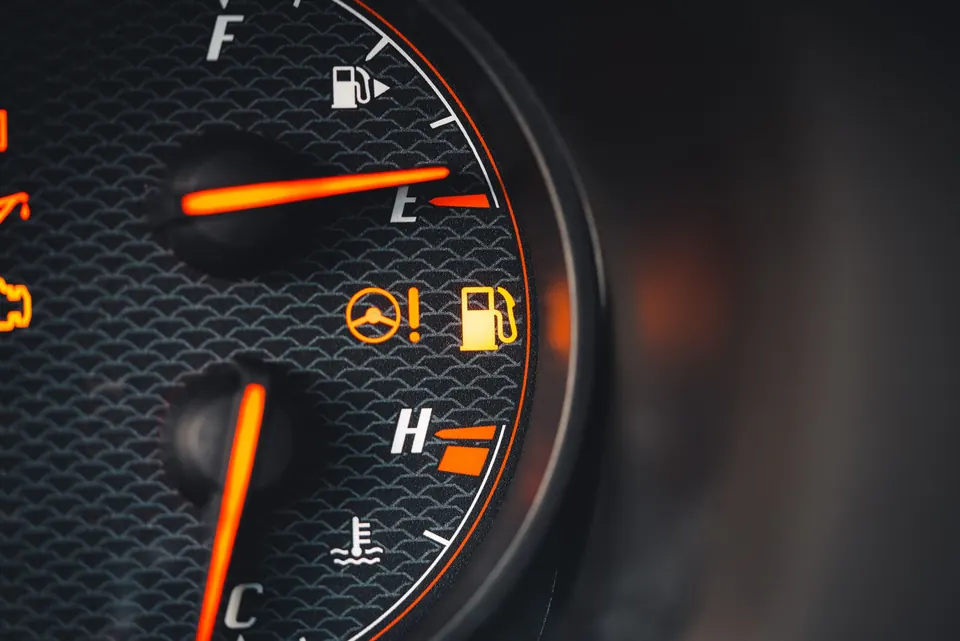
P0420 is one of the codes drivers search for most, partly because the car usually feels fine when it sets. The converter sits in the exhaust, out of sight, and the only sign is the lamp on the dash. Here is what the code says, why it matters so much at a Reno smog check, and the order of steps that protects your money if the repair turns out to be a big one.
At a glance
- P0420 is the generic SAE J2012 code for a bank 1 catalyst running below its efficiency threshold.
- Any lit check engine light fails a 1996 or newer light-duty vehicle at a Nevada smog check.
- Federal law covers some expensive emission components for up to 8 years or 80,000 miles, so ask the dealer before you pay.
- Note the code and when the light came on
Write it down so the repair shop and the dealer hear the same story.
- Call the dealer with your VIN
Ask whether the converter is covered by the federal emissions warranty or a recall.
- Test early in your renewal window
A passing test is good for 90 days, so testing early leaves time for repairs.
- After the repair, drive before the retest
Give the car up to a week of mixed city and highway driving so the catalyst self-check can finish.
The definition, then the plain version
The industry standard that names OBD II codes is SAE J2012, and its generic wording for P0420 is: Catalyst system efficiency below threshold (bank 1). Every 1996 and newer light-duty vehicle uses this same code for the same condition, whatever the brand.
In plain words: the catalytic converter is the part of the exhaust that turns the worst pollutants into less harmful gases before they leave the tailpipe. The computer watches how well it is doing that job, using an oxygen sensor in front of the converter and another one behind it. When the two readings start to look too much alike, the computer concludes the converter is no longer storing and converting the way it should, and it sets P0420.
Bank 1 is the side of the engine that holds cylinder number 1. A four-cylinder engine has only one bank, so P0420 is the code it uses. On a V6 or V8 the matching code for the other side is P0430.
Why a converter code turns on the lamp
OBD II exists to watch emissions. The Nevada DMV describes it as a computer system that continuously monitors the engine and the emission control systems, and when a sensor detects a malfunction the computer stores a trouble code and lights the check engine lamp. A weak converter is an emissions problem by definition, so it is exactly the kind of fault the system was built to flag, even when the engine runs smoothly.
What P0420 means on test day in Washoe County
The OBD test reads the same computer that set the code. With the lamp lit, the result is a fail. That is the DMV rule for every 1996 or newer light-duty vehicle, and no amount of driving changes it while the fault remains.
The DMV still advises testing with the light on. The failed report is a legal document showing why the vehicle fails, it starts the waiver process if repairs become costly, and it allows a ten-day movement permit at reduced cost if your registration has already expired. Repairs paid for before that first failed test do not count toward a waiver.
Do not erase the code to sneak through. Clearing codes right before a test gets the car rejected as not ready, because the self-checks reset, and the catalyst check is often one of the slower ones to finish again.
Common causes a repair shop checks
Xpress Smog Check Center tests vehicles. Finding the cause belongs to a repair shop, and for emissions repairs the DMV recommends a 2G licensed authorized station. Common causes a repair shop checks include:
- A converter that has worn out with age and mileage.
- An exhaust leak near the oxygen sensors that throws off their readings.
- A slow or failing oxygen sensor, front or rear.
- An engine problem upstream, such as a misfire or a rich mixture, that has overheated or coated the converter.
Check the federal emissions warranty first
Catalytic converters are among the expensive emission parts that federal law covers for up to 8 years or 80,000 miles on some vehicles. The DMV tells owners to check with the dealer for emissions warranty coverage or a recall before paying for a repair. It matters twice for P0420: the DMV will not grant a waiver to a vehicle that is eligible for warranty coverage, so the dealer is the first stop either way.
If the repair bill climbs
In Washoe County, a 1996 or newer light-duty vehicle that still fails for a lit lamp after repairs may qualify for a waiver. The repairs can be done by a 2G licensed authorized station, with receipts showing at least $200 on parts and labor directly related to the failure on the initial test, or by the registered owner, with receipts for at least $200 in related parts bought within 14 days after the initial test. Then the vehicle, both failed certificates and every receipt go to the DMV Emission Lab. The DMV charges nothing for the waiver, and it lasts one year. Our waiver page walks through it.
Sources
- dmv.nv.gov/emission_obd.htm (Nevada DMV OBD page: light on is an automatic fail, test anyway, clearing codes, federal emissions coverage 8 years / 80,000 miles; read 11/3/26)
- dmv.nv.gov/regrenewal.htm (Nevada DMV renewal page: Washoe waiver rules, $200 minimum, no waiver when eligible for warranty coverage; read 11/3/26)
- obd-codes.com/p0420 (public OBD II code reference: P0420 catalyst system efficiency below threshold, bank 1; read 11/3/26)
