

An engine runs best on a narrow balance of air and fuel, and the computer adjusts that balance many times a second. P0171 is what it reports when it has adjusted as far as it is allowed and still cannot get bank 1 back to balance. The car may hesitate, idle rough or feel completely normal. For the smog check, only the lamp counts.
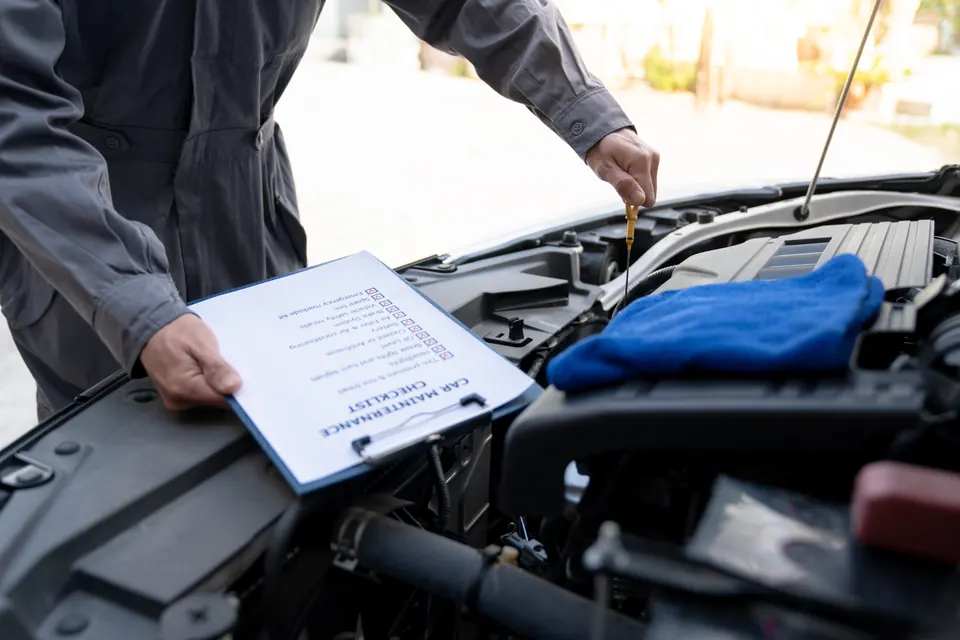
At a glance
- SAE J2012 defines P0171 as System too lean (bank 1).
- Lean means the computer measured more air than the fuel being delivered can balance.
- A lit lamp from a fuel mixture code fails the Nevada OBD test like any other.
- Clearing the code before the test resets the self-checks and brings a not ready rejection.
Lean, in one paragraph
The generic SAE J2012 wording is short: System too lean (bank 1). The computer reads the oxygen left in the exhaust and adds or trims fuel to keep the mixture where it should be; those corrections are called fuel trim. When it has to keep adding fuel to bank 1 and reaches its programmed limit, it decides the system is too lean and sets P0171. Bank 1 is the side of the engine with cylinder 1, and on a four-cylinder engine it is the only bank. If both sides of a V engine are lean, P0174 often appears with it.
What it does to emissions
A mixture the computer cannot correct is a mixture it can no longer control, and the oxygen sensors and catalytic converter are designed around a controlled one. OBD II was built to flag faults that affect emissions, so it stores P0171 and lights the lamp. The Nevada DMV's general point applies: a car with the lamp on is likely wasting fuel and polluting, even if it drives well.
Bringing a P0171 car to a Reno test
Here the rule is brief. A 1996 or newer light-duty vehicle with the check engine lamp on fails Nevada's OBD test. A lean code earns no special treatment, and the result goes to the DMV with the rest.
The DMV advises testing anyway, because the failed report is a legal record of why the vehicle fails. It is the first page of the waiver file if repairs get costly, and it supports a ten-day movement permit at reduced cost if your registration has run out. Spending on repairs before that report exists does not count toward a waiver.
Common causes a repair shop checks
Xpress Smog Check Center tests vehicles. For the cause, see a repair shop; the DMV recommends a 2G licensed authorized station for emissions repairs. Common causes a repair shop checks for a lean bank 1 include:
- Vacuum leaks: cracked hoses or intake gaskets that let in air the computer did not measure.
- An air flow sensor that reads low.
- Weak fuel delivery, such as a tired fuel pump, a clogged filter or a dirty injector.
- An exhaust leak ahead of the front oxygen sensor that adds outside air to the reading.
Before you drive in
Do not clear the code to get the lamp off for the test. The DMV is direct about it: clearing codes right before a test is an automatic rejection, because the readiness monitors reset and have to run again.
If a repair has just been made, plan for up to a week of mixed city and highway driving so the monitors can finish, then come in. Take any insurance tracker out of the diagnostic port first, since technicians must fail a vehicle with a device plugged in. If the repair involves an expensive emission component, ask the dealer whether federal emissions coverage, up to 8 years or 80,000 miles on some parts, or a recall applies.
When the lamp will not stay off
Fail, repair and pass a retest is the normal order. A 1996 or newer light-duty vehicle that still fails for a lit lamp after repairs may qualify for a Washoe County waiver. The receipts need to show at least $200 in related parts and labor at a 2G station, or at least $200 in related parts bought by the owner within 14 days after the initial test. See our waiver page for the lab visit.
Sources
- dmv.nv.gov/emission_obd.htm (Nevada DMV OBD page: lamp on is a fail, test anyway, cleared codes rejected, OBD port devices, 8 years / 80,000 miles; read 11/3/26)
- dmv.nv.gov/regrenewal.htm (Nevada DMV renewal page: Washoe waiver receipts and $200 minimum; read 11/3/26)
- obd-codes.com/p0171 (public OBD II code reference: P0171 system too lean, bank 1; read 11/3/26)
