
Reno has hard winters and hot summers, and both put stress on cars. The DMV does not publish seasonal rules for emissions tests, so this guide does not invent any. It takes the DMV's actual advice and shows where each season makes it matter, with practical timing for a drive-in visit.
At a glance
- A test result is valid 90 days, so testing early works in any season.
- After a battery replacement the DMV says a vehicle can be rejected as not ready; drive up to a week, then test.
- A loose gas cap is a common cause when the check engine light comes on suddenly.
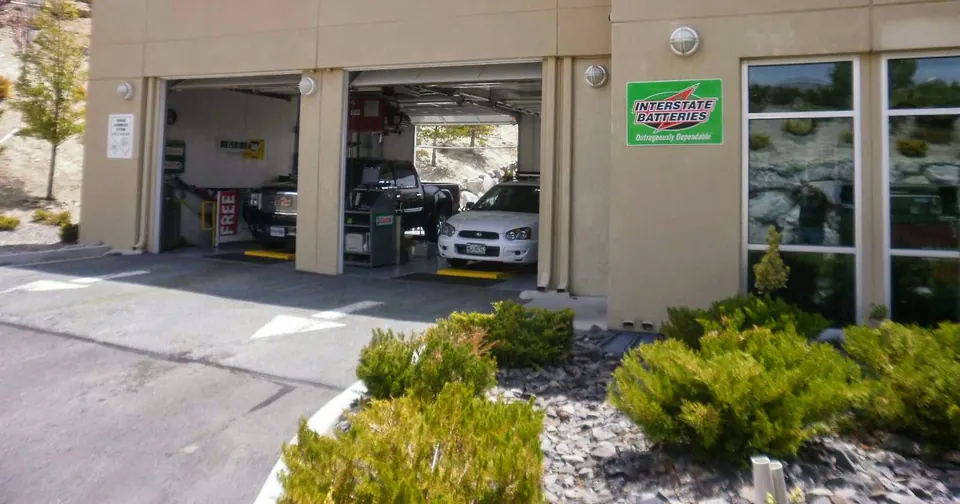
- Both Xpress Smog Check Center locations take drive-ins with no appointment, Monday through Saturday.
Start from the 90-day window
The DMV says an emissions test is valid for 90 days on renewals and private party transactions. It also says you can renew about 35 days before your registration expires. Put together, there is a window of weeks in which you can test, renew and still be early. The DMV's own advice is to get your annual emission test early so that, if it finds a problem, you have time to make repairs before the registration expires.
That advice does not depend on the month. It does, however, make sense to plan around the seasons you know are hard on your car, which is what the next sections do.
Cold weather and the battery
A battery that dies in a cold snap gets replaced or jumped, and that is where a smog check can go sideways. The DMV is specific: if your battery died, was disconnected or was recently replaced, the computer's memory has been cleared and the vehicle will be rejected as not ready. The same is true after repairs, even if the check engine light is off.
A rejection is not a failure, and no repair is needed. The DMV's fix is to drive the vehicle under varying conditions, city and highway, for up to one week so the diagnostic monitors can finish their self-checks, and then come back for the test. If a winter battery change lands just before your registration deadline, ask about a movement permit so you can drive legally while you wait; the DMV describes those on its movement permit page, and our movement permit guide explains them.
The check engine light on a cold morning
A light that comes on suddenly is worth a simple first step. The DMV says a loose gas cap is one of the most common causes, and the OBD page adds that tightening or replacing a loose or broken cap may turn the light off after a few days of normal driving. Do not erase codes to make the light go away before a test; the DMV says clearing codes right before a test causes an automatic rejection, because it erases the memory the inspector needs to see.
If the light stays on, it will fail, and the DMV still recommends testing anyway. A failed test is a legal document showing why the vehicle fails, and it is the starting point of the waiver process if repairs become costly. See our check engine light page.
Summer travel and busy weeks
Summer in northern Nevada means road trips and long drives. Long drives help a vehicle complete its readiness monitors, which is a good thing if you cleared a battery recently. The DMV's recommendation of a week of varied city and highway driving is easy to meet with a road trip. Just remember that a trip before the deadline is also a reason to test before you leave, because the DMV says early testing buys repair time.
Registration has no flexibility on the date. The state of Nevada has no grace period, and the DMV says you are responsible for renewing on time even if no notice arrives in the mail. Put the date on a calendar and work backward.
Remove devices and prepare the port
Any season: take an insurance tracker or monitoring device out of the diagnostic port before you drive in. The DMV says technicians are required to fail any vehicle with a device plugged in. Winter coats and summer clutter do not change that rule, but they do make a device easy to forget under the dash.
Fitting the visit into a day
Both locations are open Monday through Friday from 8 am to 5 pm and on Saturday, 8 am to 4 pm at Reno Northwest and 8 am to 3 pm at Reno South. Sundays are closed. Drive in with no appointment, and ask about renewing your registration in the same visit. The DMV says most OBD tests take five minutes or less. See hours and busy times for more.
Sources
- dmv.nv.gov/emission_obd.htm (Nevada DMV OBD page: battery change and not-ready results, gas cap, clearing codes, test early; read 10/19/26)
- dmv.nv.gov/emission.htm (Nevada DMV Emission Control Program: check engine light advice, validity; read 10/19/26)
- dmv.nv.gov/regrenewal.htm (Nevada DMV registration renewal timing; read 10/19/26)